Authentic German Chocolate Cake Recipe (The Best!)

A few years ago I found myself standing in the baking aisle at 9 p.m., staring at that familiar green Baker’s German’s Sweet Chocolate box while my kids were finishing homework at the kitchen table. My dad had casually said, “You know what I miss? A real German chocolate cake like Grandma used to make.” Challenge accepted.
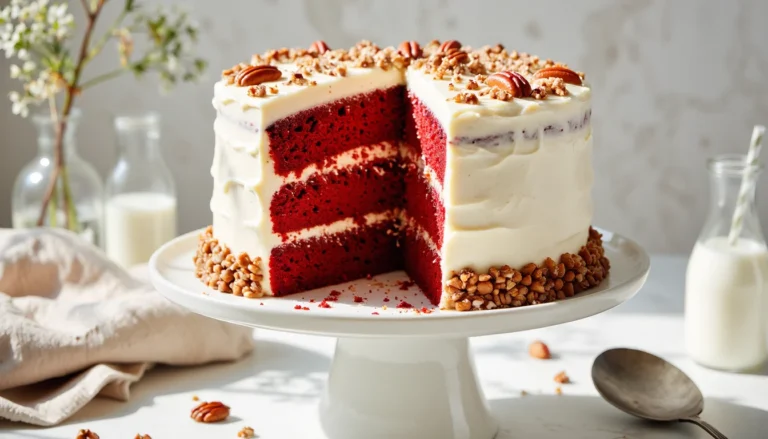
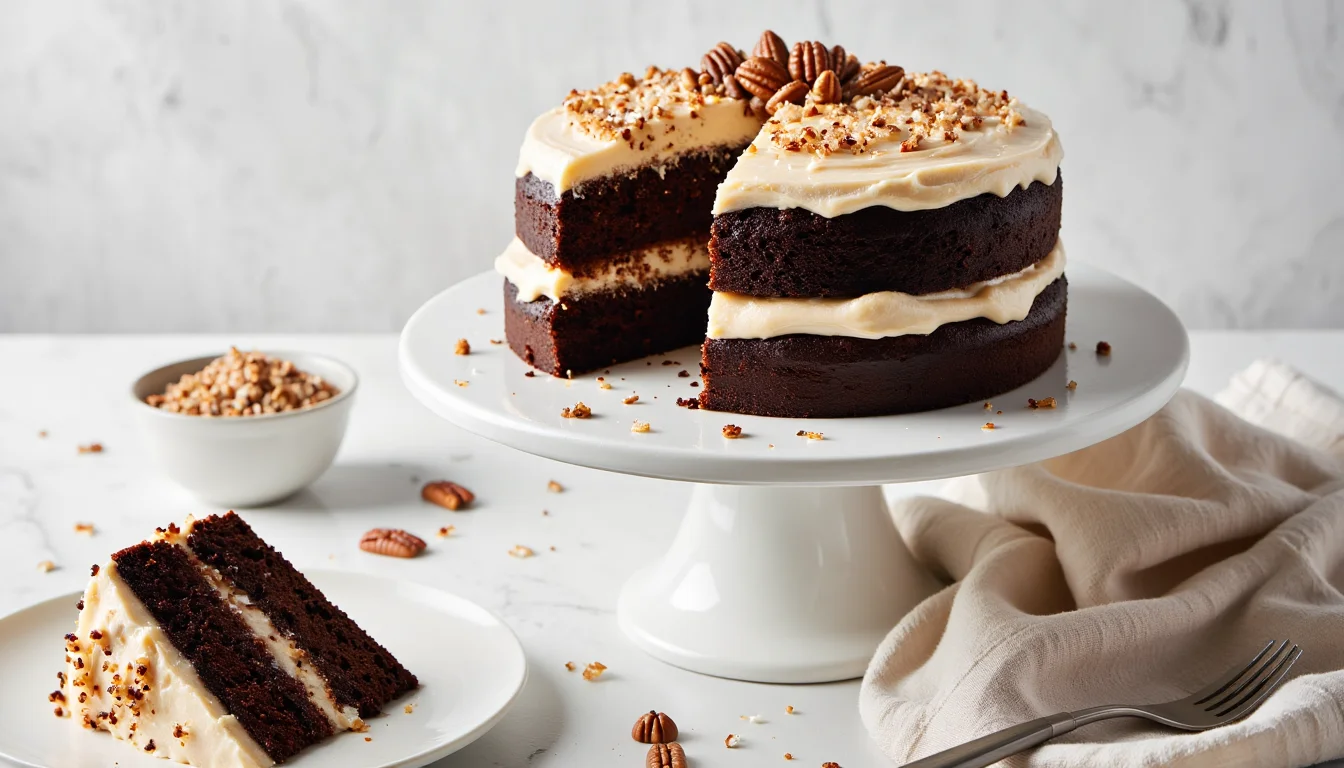
Here’s the funny part. It isn’t actually German. It’s named after Sam German, an American working for Baker’s chocolate in the 1800s, who created a milder, sweet baking chocolate that eventually inspired the famous recipe in the 1950s. So when people picture a “traditional” German Chocolate Cake, what they’re really craving is that classic American layer cake: soft chocolate sponge, gooey coconut pecan frosting, and a little nostalgia baked in.
I grew up watching my grandma make it the old-school way, separating eggs, whipping whites to stiff peaks, and cooling the frosting on the back porch because there wasn’t space in the fridge. The kitchen always smelled like toasted pecans and warm caramel. Total heaven. Also, a few slightly burned nuts, because she always forgot one pan in the oven. Relatable.
Anyway, this version leans all the way into that vintage style. Real German’s sweet chocolate, not just cocoa. Light, tender cake layers made with folded egg whites so they don’t collapse under the weight of that rich coconut pecan topping. And a true cooked custard frosting that thickens as it cools instead of sliding right off your cake.
If you’ve ever had a runny frosting disaster, I’ve got you. In this recipe I’ll walk you through the exact texture the custard needs before you add the coconut and pecans, plus a simple 48-hour make-ahead game plan so you’re not juggling hot frosting and warm cake ten minutes before guests walk in. Homemade, nostalgic, and actually practical for real life.
Craving more tall, bakery-style cakes? Head over to The Ultimate Guide to Classic Layer Cakes for step-by-step stacking tips, crumb coat secrets, and seven must-bake classics.
Why This Recipe Works
If you’ve ever tried to shortcut a German Chocolate Cake with random chocolate chips and a quick frosting, you probably ended up thinking, “Meh. That’s it?” I did the same once with a store-brand baking bar and the whole thing tasted flat. Everyone ate it, but nobody asked for seconds. That told me everything.
First, the chocolate itself. Traditional versions use German’s Sweet Chocolate, which is milder and sweeter than a dark or semi-sweet bar. That’s important. This cake isn’t supposed to be a super-dark, ultra-bitter chocolate situation. It’s a gently flavored, soft chocolate sponge that leaves room for the caramel-coconut topping to shine. When you swap in only cocoa powder or very dark chocolate, you lose that classic balance.
That said, I know you might not always find the exact bar. So I built this recipe to still work beautifully with a mix of semi-sweet chocolate and a little extra sugar, while explaining exactly how that changes the flavor. You get options, but you also know why the “real stuff” tastes a little different.
Next, the texture. A lot of regular chocolate cakes just mix whole eggs straight into the batter. This version separates the eggs, then whips the whites to stiff peaks and folds them in at the end. It sounds fussy, but it gives the batter a lift that you can actually see. And feel. The result is a light, tender crumb that doesn’t feel dense or heavy, even under thick layers of coconut pecan frosting.
That fluffy texture is also what sets this apart from a standard chocolate layer cake. Regular chocolate cake is usually richer and more intense in chocolate, built to handle buttercream or ganache. This one is intentionally a bit milder and airier so that the sweet, sticky frosting doesn’t overwhelm you after two bites. It’s all about balance on the fork.
Finally, the frosting. Instead of a quick stovetop mix-and-dump, we’re making a true custard with evaporated milk, egg yolks, sugar, and butter. You’ll cook it slowly until it coats the back of a spoon and looks like pourable pudding. Then you stir in toasted pecans and coconut and let it cool until thick and scoopable. No guessing, no soupy filling sliding off the cake stand. Just glossy, rich, spoon-straight-from-the-bowl goodness that actually stays put between the layers.
Ingredients You Need
Before you preheat the oven, it helps to see everything in one place. This is a true from-scratch, three-layer German chocolate cake, but all the ingredients are basic grocery-store stuff. No fancy cocoa powders or mystery syrups. I’ve literally grabbed everything at Target on a random Tuesday.
For the chocolate cake layers
These make three 8-inch rounds with a light, tender crumb that can handle a generous amount of frosting.
- Sweet baking chocolate: 4 oz (113 g) Baker’s German’s Sweet Chocolate, chopped.
- If you absolutely can’t find it, use 4 oz (113 g) semi-sweet chocolate and add an extra 2 tablespoons (25 g) sugar to the batter. The flavor will be slightly less “classic,” but still delicious.
- Boiling water: ½ cup (120 ml) to melt and “bloom” the chocolate so it’s silky-smooth.
- Butter: 1 cup (226 g) unsalted butter, softened to room temperature. Salted will work in a pinch; just reduce the added salt slightly.
- Sugar: 1½ cups (300 g) granulated sugar + ½ cup (100 g) light brown sugar, packed.
- The brown sugar adds a hint of caramel flavor and keeps the crumb extra moist.
- Eggs: 4 large eggs, separated, room temperature. Yolks go into the batter; whites get whipped and folded in later for that airy, lift-you-can-see structure.
- Vanilla: 1 teaspoon vanilla extract. Real or a good imitation is fine.
- Flour: 2¼ cups (about 280 g) all-purpose flour, sifted.
- If you’re tempted by cake flour, you can swap part of the all-purpose or use an AP + cornstarch hack, but this recipe is written to work perfectly with regular flour.
- Leavening & salt: 1 teaspoon baking soda + ½ teaspoon fine salt.
- Buttermilk: 1 cup (240 ml), well shaken and at room temperature.
- No buttermilk? Stir 1 tablespoon vinegar or lemon juice into 1 cup milk, let it sit 5–10 minutes. Not identical, but close enough.
And yes, I’ve made this with slightly cold buttermilk when I was rushing. The batter still worked, but the texture is better when everything isn’t fridge-cold.
For the coconut pecan frosting
This is the star of the show. Think thick, glossy, caramel-like coconut custard packed with pecans.
- Evaporated milk:1 can (12 oz / 354 ml) evaporated milk.
- Do not use sweetened condensed milk here. Totally different product, and it will make the frosting cloyingly sweet and weirdly thick.
- Sugar: 1½ cups (300 g) sugar. You can use all granulated, or half granulated / half light brown for a deeper caramel note.
- Egg yolks: 4 large yolks, room temperature. They’re what make the frosting custardy and rich.
- Butter: ¾ cup (170 g) unsalted butter, cut into cubes so it melts evenly.
- Flavor: 1½ teaspoons vanilla extract + a pinch of salt to balance all the sweetness.
- Coconut: 2 cups (about 180 g) sweetened shredded coconut. I love the classic bagged stuff; no need to get fancy.
- Pecans: 1½ cups (180 g) chopped pecans, toasted until fragrant and just a bit darker.
- Don’t skip the toasting. It turns “nice frosting” into “whoa, what is in this?” in the best way.
If you already know you want that bakery-style finish with chocolate buttercream around the sides, you’ll also need cocoa powder, powdered sugar, and a little extra butter and cream, but we’ll cover those amounts in the Assembly & Decoration section so this ingredient list doesn’t turn into a novel.
How to Make German Chocolate Cake (Step-by-Step)
You’ve got your ingredients. Now it’s just a matter of stacking the steps in the right order so you’re not juggling hot pans and whipped egg whites at the same time. I like to do this in calm little stages, usually on a Saturday afternoon when nobody needs the oven for frozen pizza.
Step 1: Prep the pans and melt the chocolate
Preheat your oven to 350°F (175°C). Grease three 8-inch round cake pans, line the bottoms with parchment circles, then grease and lightly flour the parchment too. It feels extra. It’s not. This is how you avoid that heartbreaking stuck layer.
Now melt the chocolate: place the chopped sweet baking chocolate in a heatproof bowl. Pour the ½ cup (120 ml) of boiling water over it and let it sit for 1–2 minutes, then whisk until completely smooth and glossy. If a few bits refuse to melt, set the bowl over a pan of barely simmering water and stir just until they disappear. Set the chocolate aside to cool to lukewarm.
Step 2: Cream the butter and sugars
In a large mixing bowl, beat the softened butter with the granulated and brown sugars on medium-high speed for about 3–4 minutes. You’re looking for a mixture that’s noticeably lighter in color and fluffy around the edges of the bowl. Scrape down the sides once or twice so everything gets aerated.
Add the egg yolks one at a time, beating well after each until the mixture looks thick and satiny. Mix in the vanilla and the cooled melted chocolate. At this point it will smell like hot cocoa and look like chocolate frosting. Try not to eat it with a spoon. I always want to.
In a separate bowl, whisk together the flour, baking soda, and salt.
Step 3: Build the batter and fold in egg whites
With the mixer on low, add the dry ingredients in three additions, alternating with the buttermilk. So: flour, buttermilk, flour, buttermilk, flour. Start and end with the flour and mix just until you don’t see streaks of white. Overmixing here = tougher crumb.
In a clean bowl with clean beaters, whip the egg whites on medium-high speed until they reach stiff peaks. They should stand up tall when you lift the beaters but still look glossy, not chunky or dry.
Use a spatula to stir about one-third of the whipped whites into the chocolate batter to loosen it. Then gently fold in the remaining whites in two additions, lifting from the bottom and turning the bowl as you go. You want to see the batter become lighter and more billowy without big pockets of egg white remaining. A few tiny streaks are fine. Better that than deflating everything.
Step 4: Bake, cool, and level the layers
Divide the batter evenly among the prepared pans. I like to weigh the pans on a kitchen scale so each one gets roughly the same amount. Smooth the tops with a spatula so they bake evenly.
Bake for 25–30 minutes, or until the tops spring back lightly when touched and a toothpick inserted in the center comes out with just a few moist crumbs. If your oven has hot spots (mine does), rotate the pans once during the last 5–10 minutes.
Let the cakes cool in the pans for 10–15 minutes, then run a thin knife around the edges and flip them out onto a wire rack. Peel off the parchment and let them cool completely. Completely. Warm cake plus warm frosting equals sliding layers.
If the tops domed a bit, use a long serrated knife to gently level them once they’re cool. Save the trimmings as a snack, or crumble them over any extra frosting later. Baker’s treat.
Master Class: The Coconut Pecan Frosting
This is the part that scares people. Custard. Eggs. Standing at the stove wondering if you’re about to scramble the whole thing. Don’t worry. Once you know what to look for, this frosting goes from “mystery” to “oh, I’ve got this” really fast.
Start by adding the evaporated milk, sugar, egg yolks, and butter to a medium, heavy-bottomed saucepan. Whisk everything together before you turn on the heat so the yolks are well blended and there are no streaks. Set the pan over medium heat and cook, stirring slowly but constantly with a heatproof spatula or wooden spoon, scraping the bottom and corners of the pan as you go. My rule: if I can check my phone, the heat is too low or I’m not stirring enough. Stay with it.
At first it’ll look thin and foamy. Then it will start to look smoother, and small bubbles will show up around the edges. Keep stirring. You’ll notice the mixture getting silkier and slightly thicker, like a pourable pudding or melted ice cream. It should coat the back of your spoon; when you drag a finger through that coating, the line should stay clean instead of running together. That’s your cue. If you’re a thermometer person, you’re aiming for about 195–200°F.
The big mistake that causes runny frosting? Stopping too early. If it still runs off the spoon like plain milk, it’s not ready. Cook another minute or two, stirring constantly, and watch for that gentle “plop” as it falls back into the pan. But if you see scrambled bits forming, kill the heat and strain it through a fine mesh sieve before adding the coconut and nuts. You can usually save it.
Once it’s thickened, remove the pan from the heat and stir in the vanilla, salt, coconut, and toasted pecans. It’ll seem a bit loose at this point. That’s normal. Transfer the frosting to a shallow bowl, press a piece of plastic wrap directly onto the surface, and let it cool to room temperature for at least 45–60 minutes. As it cools, it thickens into a scoopable, almost fudge-like consistency that sits proudly between cake layers instead of oozing down the sides.
To toast the pecans, spread them on a baking sheet and bake at 350°F (175°C) for about 6–8 minutes, stirring once, until they smell nutty and look slightly darker. Let them cool before adding to the frosting so they don’t thin it back out. The difference in flavor is huge, and you’ll smell it the second you stir them in.
Assembly & Decoration
Once the cake layers and frosting are completely cool, you’re basically just stacking and nudging things into place. This is the part where I usually clear the table, turn on a podcast, and shoo everyone out of the kitchen for 20 minutes.
Option 1: Classic naked sides
Set your first layer on a cake stand or board, bottom side down. If the top feels very loose or crumbly, you can flip it so the flat side is up. Spoon a generous amount of coconut pecan frosting on top, then use an offset spatula to spread it almost to the very edge. I like to leave the tiniest border so it doesn’t drip down when you add the next layer.
Repeat with the second layer: place it gently on top, line it up, and press very lightly in the center to settle it. Add more frosting, spread it out, then crown the stack with the final layer. Finish with the remaining frosting piled on top and coaxed toward the edges so you can see that gorgeous texture spilling just slightly over the sides. Not messy. Just inviting.
If your layers feel like they want to slide, slide the whole cake into the fridge for 20–30 minutes. A short chill firms everything up without drying it out. You can also gently push a long wooden skewer straight down the center of the cake as an anchor, then pull it out before serving. Grandma trick.
Option 2: Bakery-style finish
If you love the look of smooth chocolate sides and pretty swirls on top, you can add a quick chocolate buttercream as a “dam” and outer coat. Make a simple batch by beating ½ cup (113 g) softened butter with about 2 cups powdered sugar, ¼ cup cocoa powder, a pinch of salt, 1 teaspoon vanilla, and just enough milk or cream to make it spreadable. Nothing fancy. Just creamy and chocolatey.
To assemble, place the first layer on your stand and pipe or spread a ring of buttercream around the outer edge. This creates a wall to hold the coconut frosting in. Fill the center with the custard frosting, then repeat with the next layer. Once all three layers are stacked, use the remaining buttercream to frost the sides and add a small border around the top edge, leaving most of the coconut pecan filling exposed in the center.
For a final touch, sprinkle a few extra toasted pecans on top or press some around the bottom edge. If the room is warm, chill the finished cake for at least 30 minutes before slicing so you get those clean, stack-of-layers slices instead of a slow chocolate landslide.
48-Hour Make-Ahead Timeline
This dessert looks like “I spent all day in the kitchen,” but it really doesn’t have to feel that way. The trick is spreading the work over two days so you’re never rushing with warm cake, hot frosting, and guests ringing the doorbell. I learned that the hard way the first time I tried to pull this off on a weeknight. Never again.
Here’s a simple, realistic two-day plan you can follow for holidays, birthdays, or whenever you want it stress-free.
Day 1: Bake & cook
1. Bake the cake layers (afternoon or evening).
Make the batter, bake the three layers, and let them cool completely on a wire rack. Once they’re cool, level any domed tops if you want perfectly flat stacks.
2. Wrap for freshness.
Tightly wrap each layer in plastic wrap. You can stack them on a sheet pan or slide them into a large zip-top bag. Leave them at cool room temperature if your kitchen isn’t too warm, or pop them in the fridge if it is.
3. Make the coconut pecan frosting.
Cook the custard, thicken it until it coats the back of a spoon, then stir in the coconut and toasted pecans. Let it cool to room temperature, then cover and refrigerate. It will thicken even more overnight, which is exactly what you want.
At this point, dishes are done, kitchen is clean, and cake day is basically handled. You’re ahead of the game.
Day 2: Bring to temp, assemble, decorate
1. Bring everything out to soften.
About 45–60 minutes before you want to assemble, pull the cake layers and frosting out of the fridge so they’re not ice-cold. Cold cake is fine, but rock-hard frosting is hard to spread. If you’re making the bakery-style version with chocolate buttercream, this is also the time to soften extra butter.
2. Stir the frosting.
Give the coconut pecan mixture a good stir. If it feels too stiff, let it sit at room temp a bit longer or warm it very gently over a bowl of warm water, stirring until it’s spreadable again. Not runny. Just soft.
3. Assemble and decorate.
Stack and fill the layers, choose naked sides or buttercream finish, and add any extra pecans on top. Once assembled, you can chill the whole cake for 30–60 minutes to firm it up, then hold it in the fridge for several hours before serving. Just let it sit out about 20 minutes so the frosting isn’t ice-cold when you slice.
Follow this timeline and the cake feels like a relaxed project instead of a chaotic sprint. Which is exactly how a nostalgic, “Grandma-style” dessert should feel.
Troubleshooting Common Issues
Even when you follow a recipe carefully, cake drama still happens. Ovens run hot, kids distract you, someone slams a door while the layers are baking. Been there. Let’s fix the most common problems you might run into with this German Chocolate Cake.
“Why is my coconut pecan frosting runny?”
Two big culprits: it didn’t cook long enough, or it never fully cooled. The custard has to thicken on the stove until it coats the back of a spoon and falls in slow, soft “plops,” not a thin stream. Then it needs that full 45–60 minutes to cool and set. If it’s still loose after cooling, chill it in the fridge for 20–30 minutes, stirring every so often, until it firms up. Worst case, you can stir in a small handful of extra coconut to help it tighten.
“Why did my cake crack on top?”
Usually this means the oven was a bit too hot or the batter was slightly overmixed. A cracked top looks scary, but it doesn’t ruin anything. As long as a toothpick comes out with moist crumbs and not wet batter, you’re good. Let the layers cool, then gently level off any high spot with a serrated knife. Once the cake is stacked and frosted, nobody sees those cracks.
“Why did my cake sink in the middle?”
Sinking is often from underbaking, opening the oven door too early, or egg whites that were beaten past stiff and then deflated while folding. Make sure you bake until the centers spring back and the toothpick test is clean. And when you fold in the whites, use a gentle hand. Batter that’s still slightly mounded in the center going into the oven usually bakes up nicer than batter that’s been stirred flat.
“Can I use 9-inch pans instead of 8-inch?”
Yes, but the layers will be thinner and may bake a few minutes faster. Start checking around 20–22 minutes. You can also make two 9-inch layers instead of three and use a thicker frosting layer between them. Just keep an eye on doneness and don’t wait for super tall domes.
If something still feels off and you’re staring at the layers thinking, “This is a disaster,” stop for a second. Chill the cakes, chill the frosting, trim what you can, and stack it anyway. A slightly imperfect homemade slice with gooey coconut frosting tastes better than any store-bought version. Every time.
Storage & Freezing Instructions
The good news. This dessert actually keeps really well if you store it the right way. That coconut pecan topping helps lock in moisture, so you’re not left with dry, sad slices the next day. Or the day after that.
Does it need to be refrigerated?
Short answer: eventually, yes. The frosting is made with eggs and dairy, so you shouldn’t leave the whole cake at room temperature for days. Once it’s fully assembled, you can leave it covered at cool room temp for up to about 24 hours. After that, move it to the fridge.
To store in the fridge, cover the cake loosely with a cake dome or an inverted bowl. You don’t want plastic wrap touching the top because it’ll stick to the frosting and pull off all those pretty coconut peaks. If you’ve sliced into it already, press a piece of parchment against the cut side, then cover the whole thing. It will keep well in the fridge for about 4–5 days.
Before serving leftovers, let slices sit at room temperature for 15–20 minutes so the frosting softens a bit and the flavors come back to life. Cold cake straight from the fridge is fine in a pinch, but the texture and flavor are much better when it’s not icy. Warm-ish chocolate and coconut just taste richer.
Freezing the whole cake
If you want to bake ahead for a party, I recommend freezing the layers before frosting. Wrap each cooled cake layer tightly in plastic wrap, then in foil, and freeze for up to 2 months. Thaw overnight in the fridge, then bring to room temp and frost as usual. The frosting itself can be made 2–3 days ahead and kept in an airtight container in the fridge. Stir well before using.
You can freeze a fully assembled cake, but it is a bit messier. Freeze the decorated cake on a tray, uncovered, until the frosting is firm, then wrap it in plastic and foil. Thaw in the fridge overnight, then let it stand at room temperature for 20–30 minutes before serving.
Freezing individual slices
For leftovers, I usually freeze slices. Place each slice on a small piece of parchment and freeze until solid. Then wrap tightly in plastic and store in a freezer bag. They’ll keep about 2 months. To serve, thaw in the fridge or on the counter until the frosting is soft and dreamy again. Perfect for late-night “just one more bite” moments.
German Chocolate Cake Printable Recipe Card
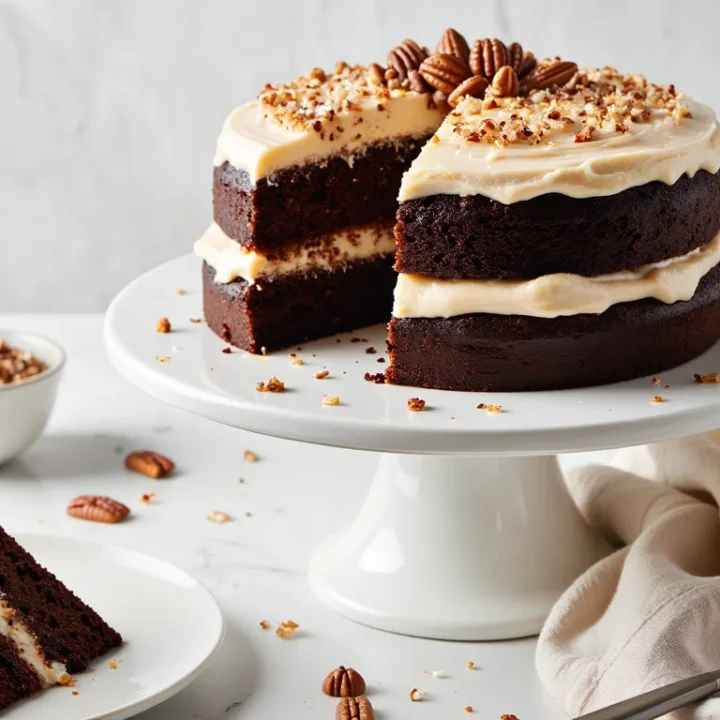
Authentic German Chocolate Cake
A classic three-layer German chocolate cake with a light, tender crumb and a gooey coconut pecan frosting made the traditional way. Perfect for birthdays, holidays, and anyone craving a nostalgic, from-scratch dessert.
Ingredients
For the Cake:
- 4 oz (113 g) Baker’s German’s Sweet Chocolate, chopped
- 1/2 cup (120 ml) boiling water
- 1 cup (226 g) unsalted butter, softened
- 1 1/2 cups (300 g) granulated sugar
- 1/2 cup (100 g) light brown sugar, packed
- 4 large eggs, separated, room temperature
- 1 teaspoon vanilla extract
- 2 1/4 cups (about 280 g) all-purpose flour, sifted
- 1 teaspoon baking soda
- 1/2 teaspoon fine salt
- 1 cup (240 ml) buttermilk, room temperature, well shaken
For the Coconut Pecan Frosting:
- 1 can (12 oz / 354 ml) evaporated milk
- 1 1/2 cups (300 g) sugar (all granulated or half granulated, half light brown)
- 4 large egg yolks, room temperature
- 3/4 cup (170 g) unsalted butter, cut into cubes
- 1 1/2 teaspoons vanilla extract
- 1/4 teaspoon fine salt
- 2 cups (about 180 g) sweetened shredded coconut
- 1 1/2 cups (180 g) chopped pecans, toasted and cooled
Optional Chocolate Buttercream for Sides:
- 1/2 cup (113 g) unsalted butter, softened
- 2 cups (240 g) powdered sugar
- 1/4 cup (20 g) unsweetened cocoa powder
- 1/4 teaspoon fine salt
- 1 teaspoon vanilla extract
- 2–4 tablespoons milk or heavy cream, as needed for consistency
Instructions
- Preheat the oven to 350°F (175°C), then grease three 8-inch round cake pans, line the bottoms with parchment circles, and grease and lightly flour the parchment and sides of the pans.
- Place the chopped German sweet chocolate in a heatproof bowl and pour the boiling water over it, letting it sit for 1–2 minutes before whisking until completely smooth and glossy; set aside to cool to lukewarm.
- In a medium bowl whisk together the flour, baking soda, and salt, then set the dry mixture aside.
- In a large mixing bowl beat the softened butter, granulated sugar, and brown sugar on medium-high speed for 3–4 minutes until light and fluffy, scraping down the bowl as needed.
- Add the egg yolks one at a time, beating well after each addition, then mix in the vanilla and the cooled melted chocolate until the batter is smooth.
- With the mixer on low speed add the dry ingredients in three additions, alternating with the buttermilk (dry, buttermilk, dry, buttermilk, dry), mixing only until just combined and no dry streaks remain.
- In a clean bowl with clean beaters whip the egg whites on medium-high speed until they reach stiff, glossy peaks that stand up when the beaters are lifted.
- Stir about one third of the whipped egg whites into the batter to loosen it, then gently fold in the remaining whites in two additions until mostly uniform without deflating the mixture.
- Divide the batter evenly among the prepared pans, smooth the tops, and bake for 25–30 minutes, or until the tops spring back when lightly touched and a toothpick inserted in the centers comes out with just a few moist crumbs.
- Cool the cakes in the pans for 10–15 minutes, then run a thin knife around the edges, invert onto wire racks, peel off the parchment, and let the layers cool completely before leveling any domed tops.
- To make the frosting, whisk together the evaporated milk, sugar, egg yolks, and butter in a medium heavy-bottomed saucepan before turning on the heat.
- Cook the mixture over medium heat, stirring constantly and scraping the bottom and corners, until it thickens, coats the back of a spoon, and falls back into the pan in slow “plops,” about 10–12 minutes.
- Remove the pan from the heat and stir in the vanilla, salt, shredded coconut, and toasted pecans until evenly combined.
- Transfer the frosting to a shallow bowl, press plastic wrap directly onto the surface, and let it cool to room temperature for 45–60 minutes, stirring occasionally, until thick and spreadable.
- To assemble with classic naked sides, place the first cake layer on a serving plate or stand and spread about one third of the coconut pecan frosting over the top, almost to the edge.
- Add the second layer on top, spread with another third of the frosting, then place the final layer on and spread the remaining frosting over the top, nudging it just slightly over the edges; chill 20–30 minutes if the layers feel unstable.
- For the optional bakery-style finish, beat the buttercream ingredients together until smooth and creamy, adding just enough milk or cream for a spreadable consistency.
- Pipe or spread a ring of buttercream around the edge of each cake layer to form a dam, fill the centers with coconut pecan frosting, then stack the layers and use the remaining buttercream to frost the sides and add a border around the top.
- For a 48-hour make-ahead schedule, bake and cool the cake layers and make the frosting on Day 1, wrap and refrigerate the layers, refrigerate the frosting, then on Day 2 bring everything to room temperature, stir the frosting until smooth, assemble and decorate the cake, and chill briefly before slicing.
Notes
- Use real Baker’s German’s Sweet Chocolate for the most authentic flavor; if using semi-sweet, add 2 tablespoons (25 g) extra sugar to the cake batter to mimic the sweetness.
- Do not substitute sweetened condensed milk for evaporated milk in the frosting; it is much sweeter and will change the texture.
- If you do not have buttermilk, make a quick substitute by adding 1 tablespoon white vinegar or lemon juice to a measuring cup, then filling to 1 cup (240 ml) with milk and letting it sit 5–10 minutes.
- The frosting must cook until it visibly thickens and coats the back of a spoon; undercooking is the most common cause of runny coconut pecan frosting.
- Frosting will look thinner when hot and will thicken significantly as it cools; if needed, chill it briefly in the refrigerator and stir until spreadable.
- To toast pecans, spread them on a baking sheet and bake at 350°F (175°C) for 6–8 minutes, stirring once, until fragrant and slightly darker, then cool before adding to the frosting.
- Three 8-inch pans give tall layers; you can bake the batter in two 9-inch pans instead, but the layers will be thinner and may bake in closer to 20–24 minutes.
- For best texture, do not overmix the batter once the flour is added and fold the egg whites gently so the cake stays light and tender.
- The assembled cake can be kept covered at cool room temperature for up to 24 hours, then should be stored in the refrigerator for 4–5 days.
- For longer storage, wrap cooled unfrosted layers tightly and freeze for up to 2 months; thaw overnight in the refrigerator before frosting.
- Individual frosted slices can be frozen on a tray until firm, then wrapped and stored in a freezer bag for up to 2 months; thaw in the fridge or at room temperature until the frosting softens.
- Bring chilled cake or slices to room temperature for 15–20 minutes before serving so the frosting is creamy and the flavors are at their best.
Nutrition Information:
Yield: 12 Serving Size: 1 sliceAmount Per Serving: Calories: 650Total Fat: 34gSaturated Fat: 19gTrans Fat: 0gUnsaturated Fat: 0gCholesterol: 0mgSodium: 0mgCarbohydrates: 80gNet Carbohydrates: 0gFiber: 0gSugar: 60gSugar Alcohols: 0gProtein: 7g
Nutrition values are estimates and will vary based on ingredients and brands.
Frequently Asked Questions (FAQ)
Love This Recipe? Discover More Classic Layer Cake Favorites
If this layer cake hit the spot, don’t miss The Ultimate Guide to Classic Layer Cakes where you’ll find more timeless flavors, smart frosting pairings, and easy fixes for every leaning, crumbly slice.